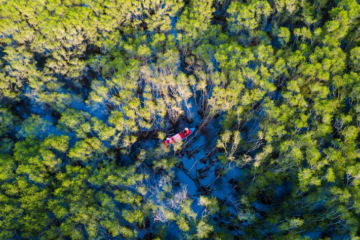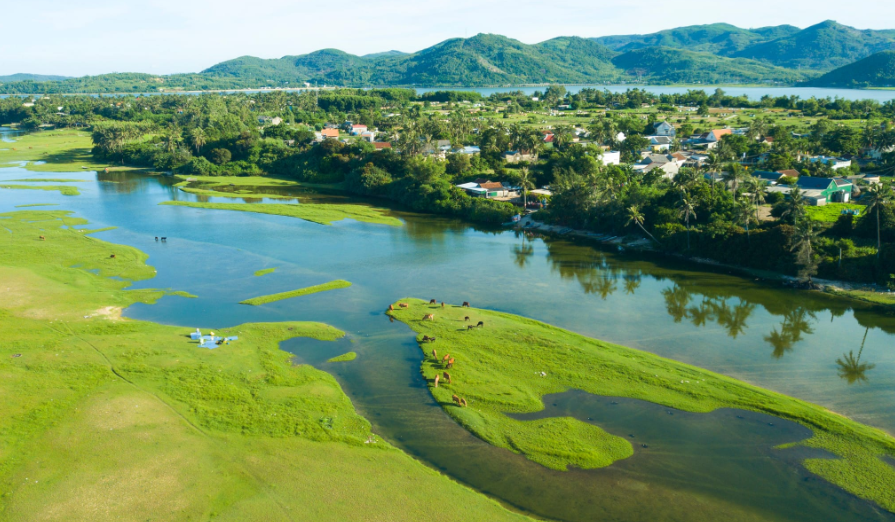
The Netherlands has a unique historical relationship with water – more than 26% of its territory lies below sea level, and nearly 60% of its population lives in flood-prone areas. This very pressure for survival has forced the Netherlands to become a pioneer in quantifying the economic value of natural ecosystems – not for environmental ideals, but purely for financial calculations: without well-functioning delta ecosystems, the cost of protecting the country would be unaffordable for any government.
Since the early 2000s, the Netherlands has been developing its own Natural Accounts (NCA) framework for the Rhine-Maas-Scheldt delta system- one of the world’s most complex and tightly managed deltas. A key feature of the Dutch model is the direct integration of NCA data with policy decision-making processes- going beyond academic reporting and becoming a real tool for planning and budget allocation.
The delta Rhine-Maas-Scheldt ecosystem account is organized into four main service groups, each measured by both physical and monetary value:
a) Flood control services
This is the most valuable and also the most thoroughly measured group of services. Wetlands, riparian buffer zones, and natural mangrove forests provide water storage and regulation capabilities, reducing flood peaks. The valuation method uses an avoided damage model: if these ecosystems disappear and are replaced by hard infrastructure, the annual cost of flood damage would increase by an estimated €15 billion per year – including property damage, economic disruption, medical costs, and resettlement.
Importantly, the €15 billion figure is not a rough estimate but is constructed from detailed hydrological models incorporating flood risk maps, real estate data, and economic infrastructure data across geographical grids. This approach allows policymakers to make a direct comparison: investing €1 in wetland conservation vs. investing €1 in concrete dikes – which provides greater protection?
b) Drinking water supply service
Groundwater aquifers and natural filtration systems through sand and peat ensure a supply of clean water for large cities. The value is quantified at €2 billion per year, based on the cost of alternative water treatment if these natural filtration services were absent. Notably, the Netherlands tracks trends over time: as wetland quality deteriorates due to agricultural pollution or urbanization, water treatment costs increase accordingly – a causal link demonstrated by continuous data.
c) Entertainment and tourism services
The delta ecosystem – including wetlands, riverine green corridors, and natural coastlines – generates an estimated €1 billion in direct recreational value annually. The measurement methodology combines travel cost methods, willingness-to-pay surveys, and local economic data from ecotourism destinations. This service sector, while smaller in absolute value, is politically significant as it generates broad support from both the local community and the tourism industry.
d) Maintaining groundwater quality
This is the most difficult service to quantify but has the greatest long-term importance. Peat and wetland ecosystems act as biological filters, retaining nitrates, phosphates, and agricultural pollutants before they seep into groundwater. The Netherlands uses a combination of hydrogeological modeling and long-term monitoring data to estimate the cost of replacement treatment if the natural filtering function is lost – particularly important in the context of climate change increasing salinity intrusion events.
Synthesizing data from numerous coastal wetland restoration projects between 1995 and 2015, the Dutch study yielded a finding with significant policy implications: every €1 invested in coastal wetland restoration generates €5 – €8 in cumulative ecosystem service value – a superior social return on investment compared to most hard infrastructure projects.
This figure is calculated using the net present value method over a 30 – 50 year lifespan, including initial investment costs, maintenance costs, and the total accumulated ecosystem service value over time. The key point is that natural ecosystems, unlike hard infrastructure, typically upgrade themselves over time – a restored wetland will have better service capacity in year 20 than in year 5, while a concrete dike will not.
Evidence from the NCA directly shaped one of the Netherlands’ boldest policy decisions: the “Room for the River” (Ruimte voor de Rivier) program , launched in 2006 with a budget of €2.3 billion.
Background: Following the near-severe floods of 1993 and 1995, the Dutch government faced a choice between two options – (A) raising and reinforcing the entire dike system at an estimated cost of €5.3 billion, or (B) “returning space to the river” by relocating some residential areas away from the floodplain, expanding floodplains, digging additional channels, and restoring wetlands – at a cost of €2.3 billion. NCA analysis showed that option B was not only €3 billion cheaper but also generated an additional €1.2 billion in new ecosystem services (recreation, water purification, biodiversity), while reducing the risk of further flooding in the long term due to greater adaptability to climate change.
The program, completed in 2015, was implemented at 30 sites along the Rhine, Maas, and Waal rivers. Post-audit assessments confirmed: significantly increased flood protection, increased riverside property values, and markedly restored biodiversity indicators – comprehensive results that could not have been achieved with investment in hard infrastructure alone.
The Dutch model’s success is due not only to the technical quality of the NCA, but also to several key institutional factors:
Institutional integration: The Netherlands Environmental Assessment Agency (PBL) plays a formal role in the budget approval process – all public investment projects over €100 million related to water management must include a quantitative ecosystem impact assessment. The NCA is not an optional advisory report but a mandatory document in the assessment dossier.
Long-term monitoring data: The Netherlands maintains a continuous hydrological and ecological monitoring network for decades, providing reliable baseline data for all NCA calculations. Without high-quality historical data, estimates of ecosystem service values would be questionable and difficult to incorporate into policy decisions.
Multidisciplinary technical capabilities: The NCA development teams include ecoeconomists, hydraulic engineers, ecologists, and GIS specialists – reflecting the view that NCA is a product of multiple disciplines and cannot be effective based on a single specialization.
Effective policy communication: The Dutch government invested in presenting NCA results in language that policymakers and the public could understand – not dense academic reports, but infographics.